
Mortgages for First Time Home Buyers in Alberta
Your Trusted Airdrie and Cochrane Mortgage Planner
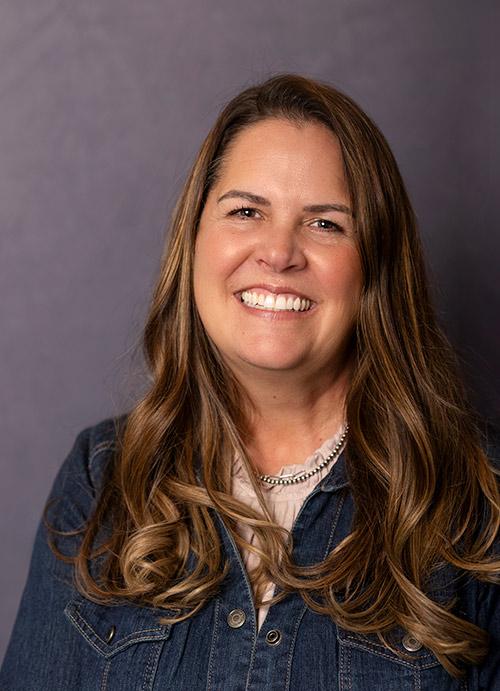
When you hear Mortgages think Patricia
First-Time Home Buyer Guide for Alberta: FHSA, Down Payments, Pre-Approval & Closing Costs
I've spent the last 20 years helping first-time buyers find the right mortgage across Calgary, Airdrie, and Cochrane.
Buying your first home is a big step. My job is to make the financing side of it feel simple, so you can focus on finding the place that's right for you.
Start Saving: The First Home Savings Account (FHSA)
The First Home Savings Account (FHSA) is one of the most useful tools available to first-time buyers today. It combines the tax deduction of an RRSP with the tax-free growth and withdrawals of a TFSA. Your contributions lower your taxable income now, and the money comes out tax-free when you use it toward your first home.
Here's how it works:
- Contribute up to $8,000 per year, to a $40,000 lifetime limit per person
- Unused room, up to $8,000, carries forward to the next year
- Contributions are tax-deductible, just like an RRSP
- Investment growth inside the account is tax-free
- Withdrawals for a qualifying first home purchase are tax-free
- The account can stay open for up to 15 years, or until the end of the year you turn 71
To open one, you need to be a Canadian resident, at least 18 or the age of majority in your province, and a first-time buyer. That generally means you, or your current spouse or common-law partner, haven't owned and lived in a home during the current calendar year or the previous four years.
My advice: open your FHSA as early as possible, even if buying is still a few years off. The earlier it's open, the more time your contribution room and investments have to grow.
Your FHSA + the RRSP Home Buyers' Plan
Here's something a lot of first-time buyers don't realize: you can use your FHSA and the RRSP Home Buyers' Plan (HBP) together on the same home purchase.
- FHSA: up to $40,000 per person, tax-free, and it does not need to be repaid
- RRSP Home Buyers' Plan: up to $60,000 per person, repaid to your RRSP over 15 years, starting two years after you withdraw
Combined, that's up to $100,000 per person, or $200,000 for a couple, toward your down payment.
A few conditions apply to both. You need to be a first-time buyer at the time of withdrawal, have a written agreement to buy or build your home in place, and intend to move in within a year.
For the HBP specifically, your RRSP funds need to have been in the account for at least 90 days before you withdraw them. If you skip a scheduled repayment, that amount gets added to your taxable income for the year.
I walk every client through the mix of FHSA and HBP that makes sense for their situation. Get in touch and we'll map it out together.
Government Programs & Tax Credits for First-Time Buyers
Beyond the FHSA and HBP, there are a few more federal programs worth knowing about.
First-Time Home Buyers' Tax Credit (HBTC)
This is a non-refundable federal tax credit, claimed on line 31270 of your tax return for the year you buy.
You can claim up to $10,000, worth up to $1,500 back at tax time. If you're buying with a spouse, partner, or other co-buyers, your combined claim across everyone is capped at that same $10,000, so it is worth deciding together how to split it.
GST/HST New Housing Rebate
If you're buying a new build, a substantially renovated home, or building your own, you may qualify for a rebate on the GST. In Alberta, only GST applies at 5%.
The standard rebate phases out as the purchase price climbs toward $450,000. Your builder may have already factored this into your price, so it is worth confirming with your realtor or builder.
First-Time Home Buyers' GST Rebate
As of 2025, first-time buyers purchasing a new build can also apply for a separate, more generous rebate: 100% of the GST on homes priced up to $1 million, phasing out between $1 million and $1.5 million.
This stacks on top of the standard rebate above, not instead of it. Ask me and we'll check whether your purchase qualifies.
First-Time Home Buyer Incentive (FTHBi) — Closed
The federal shared-equity FTHBi program stopped accepting new applications in March 2024. If you already have an agreement in place, it's still honoured, but it is no longer available to new buyers.
How I Help You Through the Process
Here's what working with me looks like, start to finish:
- Pre-approval consultations to establish your budget
- Coordinating with your realtor, home inspector, appraiser, and lawyer throughout
- Walking you through your mortgage product options and financial guidance
- Managing your financing conditions
Understanding Your Budget: Down Payment, Insurance & Closing Costs
Before you start shopping, it helps to know exactly what you can afford and what to budget beyond the purchase price.
Down Payment Minimums
- Purchase price under $500,000: minimum 5% down
- $500,000 to $1,499,999: 5% on the first $500,000, plus 10% on the remainder
- $1,500,000 and up: minimum 20% down, and mortgage insurance isn't available at this price point
Mortgage Default Insurance
If your down payment is under 20%, you'll need mortgage default insurance through CMHC, Sagen, or Canada Guaranty.
This protects your lender, not you, but it is what lets you buy with a smaller down payment.
The premium runs 2.8% to 4.0% of your mortgage amount and is added to your mortgage rather than paid upfront. It is only available on homes under $1,500,000.
If you're a first-time buyer with an insured mortgage, you can now also choose a 30-year amortization instead of the standard 25. That spreads your mortgage over more years and can meaningfully lower your monthly payment. Ask me whether it makes sense for you.
Closing Costs
Many first-time buyers budget the down payment and stop there. Plan for an additional 1.5% to 4% of the purchase price to cover:
- Home inspection: $400 to $600
- Legal and lawyer fees: $1,500 to $2,500
- Title insurance: approximately $300
- Property tax adjustment, depending on time of year
- Moving costs
- Any immediate repairs or purchases after move-in
One perk of buying in Alberta is that there is no provincial land transfer tax here, unlike Ontario or BC. If you're considering a purchase outside Alberta, factor that cost in.
Getting Pre-Approved
A mortgage pre-approval is one of the most important early steps. It tells you how much you can borrow and can lock in your rate for a set period, typically 90 to 120 days.
Here's how it works:
- Complete my online application
- Submit your documentation
- I review everything and send you your pre-approval along with a full payment breakdown
Generally, you'll need:
- Proof of income, such as pay stubs, T4s, and Notice of Assessment
- An employment letter
- Proof of your down payment, including bank, FHSA, or RRSP statements
- Government-issued photo ID
- A list of your assets and liabilities
- Your SIN for a credit check
The Stress Test
Nearly all mortgages in Canada are subject to a "stress test." You need to qualify at the higher of your contract rate plus 2%, or 5.25%.
It sounds strict, but it exists to make sure you can still comfortably afford your mortgage if rates rise. I factor this in when calculating what you can be pre-approved for.
Pre-Approval vs. Pre-Qualification
A pre-qualification is a quick, unverified estimate based on what you tell me. It is a useful starting point, but not a commitment.
A pre-approval is the real thing. I verify your documents and credit, and it carries far more weight with sellers.
And one more thing worth knowing: working with a mortgage broker, rather than going straight to one bank, means I can shop your application across dozens of lenders to find the best rate and terms for your situation, at no cost to you.
Finding Your Home & Making an Offer
Work With a Realtor
Your realtor represents your interests throughout the process, and as a buyer, their fee is typically paid by the seller, so their expertise costs you nothing.
Look for someone who specializes in your target neighbourhood and price range, has experience with first-time buyers, and communicates clearly. I can refer some great realtors if you need one.
What to Look for During Viewings
- The age and condition of major systems: roof, furnace, water heater, windows
- Any signs of water damage, mould, or structural issues
- The neighbourhood: transit, schools, and nearby amenities
- Parking, storage, and outdoor space
- Any planned development or zoning changes nearby
Making an Offer
Once you've found the one, your realtor will help you draft an offer.
Key pieces include the purchase price, conditions such as financing and home inspection, your deposit amount and timeline, and the possession date.
If your offer includes a financing condition, plan for at least 10 business days. That gives me and the lender enough time to finalize everything.
The seller can accept, reject, or counter, and negotiations sometimes take a round or two.
The Home Inspection
Always include a home inspection condition in your offer.
A qualified inspector evaluates the property's structure, systems, and components and gives you a written report, which can reveal issues that affect price or your decision to move forward.
Down Payment Documentation
Whatever the source of your down payment, your lender will need to see where it came from:
- Savings or RRSP funds: 90-day account history
- Gifted funds: a signed gift letter, plus proof the funds were deposited
- Borrowed funds: a statement showing the minimum payment obligation
Closing Day
Once you're under contract, here's what happens on the way to your keys:
- Appraisal: a third-party appraisal is ordered to confirm the home's value, which also helps prevent fraud
- Lender review: your lender reviews and satisfies any final conditions before approving your mortgage
- Legal appointment: I'll book your lawyer to handle the paperwork
- Before closing: you'll provide your down payment funds to your lawyer in advance, typically by wire transfer, sign your mortgage documents, and provide proof of home insurance
- Closing costs: you'll pay your legal fees and any adjustments at this time
- Keys: once everything is signed and the funds have transferred, the property closes and you get the keys
Congratulations, you're a homeowner!
Quick-Reference: First-Time Home Buyer Checklist
- Open your FHSA and start contributing
- Review your credit and address any issues
- Set your budget
- Get pre-approved
- Hire a realtor
- Claim the Home Buyers' Tax Credit at tax time
- Budget your closing costs
- Get home insurance
- Track your FHSA/HBP contributions and repayments
- Celebrate!